

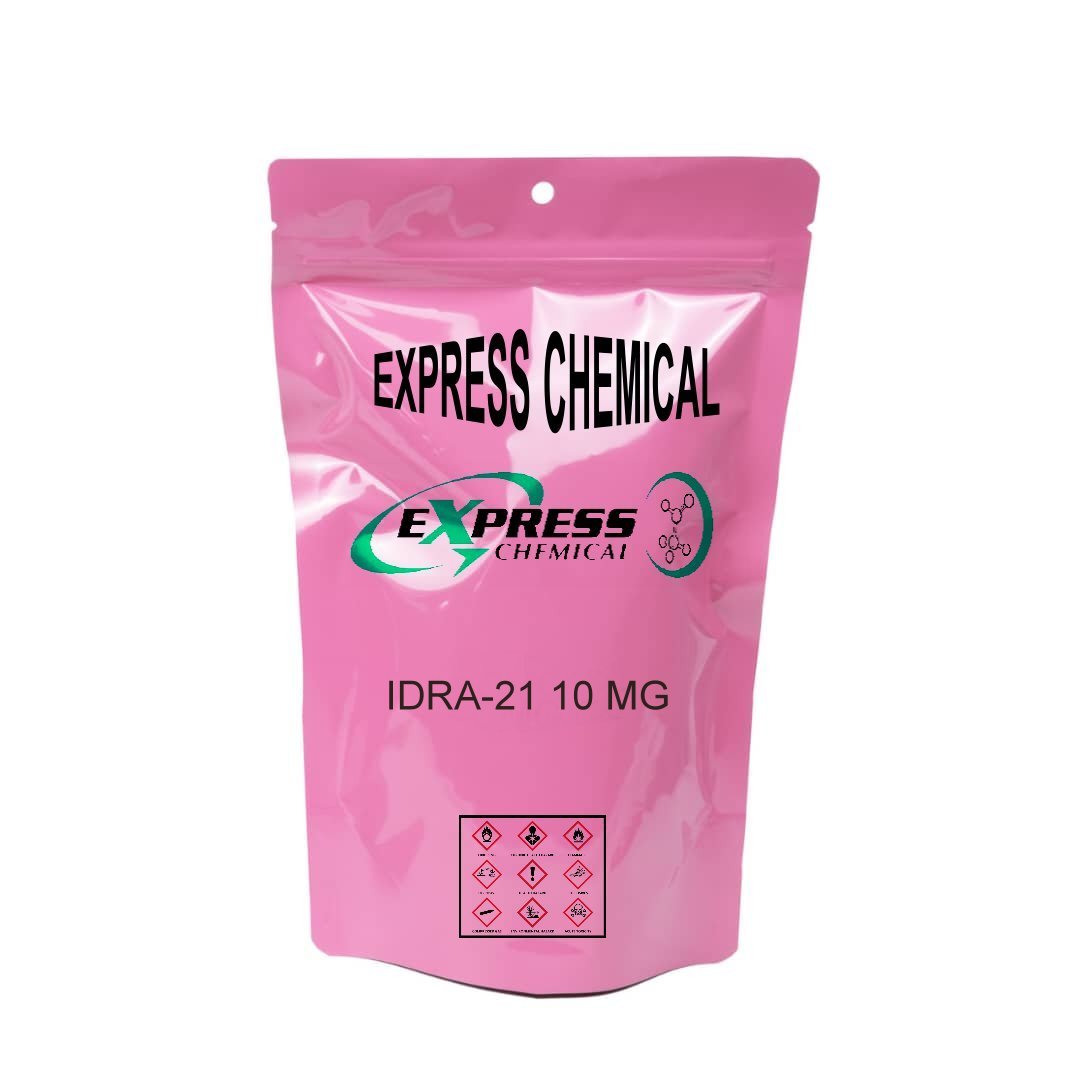
IDRA-21 10 MG Pellets
IDRA-21 Pellets properties
Synonym : 7-chloro-3-methyl-3,4-dihydro-2H-1,2,4-benzothiadiazine 1,1-dioxide
CAS Number : 22503-72-6
Formula : C8H9ClN2O2S
Molar mass : 232.6 g/mol
Purity : >97%
€13.50 – €398.58Price range: €13.50 through €398.58
* The information on this page is a summary and is not intended to cover all available information about this medication. It does not cover all possible uses, directions, precautions, drug interactions or adverse effects and is not a substitute for the expertise and judgement of your healthcare professional.
IDRA-21 10 MG Pellets – Scientific Description & User Manual
Product description
IDRA-21 (10 mg pellets) is a potential AMPA receptor potentiator belonging to the class of nootropic and neuroprotective research chemicals . It works by enhancing glutamate-induced signaling in the brain, which may lead to improved cognitive function, neuroplasticity, and potentially neurorecovery.
These pellets are highly pure (≥98%) , standardized dosed and intended solely for scientific research and preclinical studies .
Uses & Applications
IDRA-21 is being studied for its possible effects on:
-
Cognitive Enhancement – May increase alertness, learning ability, and memory consolidation.
-
Neuroprotection – Potential protective effect in neurodegenerative diseases (e.g. Alzheimer’s, stroke).
-
Neurological Recovery – May Promote Synaptic Plasticity After Brain Injury.
-
Scientific Research – Study of AMPA receptor modulation and glutamate signaling.
⚠ Not approved for human or veterinary use – For in vitro and controlled preclinical studies only.
Dosage & Safety Guidelines
-
Investigational dosage (in vitro/preclinical): 5–20 mg/kg (depending on model).
-
Pellet Solution: Can be dissolved in distilled water or DMSO for experiments.
-
Administration: Orally (animal models) or directly in cell cultures.
-
Frequency: Single dose for acute effect; long-term studies require careful monitoring.
🚨 NB:
-
No human application – No safety data for human use.
-
High doses may cause neuroexcitotoxicity.
-
Avoid combination with other glutamate modulators.
Disadvantages & Risks
-
Overstimulation of neurons (risk of excitotoxicity in case of overdose).
-
Possible anxiety or agitation in susceptible models.
-
Limited long-term data on tolerance and adverse effects.
-
Not suitable for chronic use without extensive toxicity studies.
Frequently Asked Questions (FAQs)
1. Is IDRA-21 legal in the Netherlands?
Yes, but only for scientific research . It doesn’t fall under the Opium Act, but it’s also not approved as a medicine.
2. How exactly does IDRA-21 work?
It enhances the AMPA receptor response , making glutamate signaling longer and more intense. This can lead to improved synaptic communication.
3. Can IDRA-21 be compared to other nootropics?
It has a unique mechanism of action, but similar targets as racetams or ampakines (e.g. Sunifiram).
4. Are there any known interactions?
-
NMDA antagonists (e.g. memantine) – Potentially adverse effects.
-
GABAergic agents (e.g., benzodiazepines) – May reduce anxiolytic effects.
Lab Report & Quality Control
-
HPLC analysis: ≥98% purity .
-
No detectable heavy metals or solvent residues .
-
Homogeneous pellet formulation for consistent dosing.
-
Batch certification available for research institutions.
Recommended Research Scenarios
-
Cognitive studies – Effects on memory and learning in animal models.
-
Neuroprotective research – Potential role in ischemic injury (stroke models).
-
Electrophysiology – AMPA receptor response measurements in neuronal cultures.
🔬 For controlled laboratory use only – No recreational use!




 EN
EN  DE
DE  PT
PT  FR
FR  ES
ES  IT
IT  CS
CS  SK
SK  PL
PL  RU
RU  ZH
ZH  NL_BE
NL_BE  IS
IS  NB
NB  NN
NN  SV
SV  DA
DA  DE_AT
DE_AT  SL
SL  TR
TR  FI
FI  AR
AR  ET
ET  FR_BE
FR_BE  HR
HR