


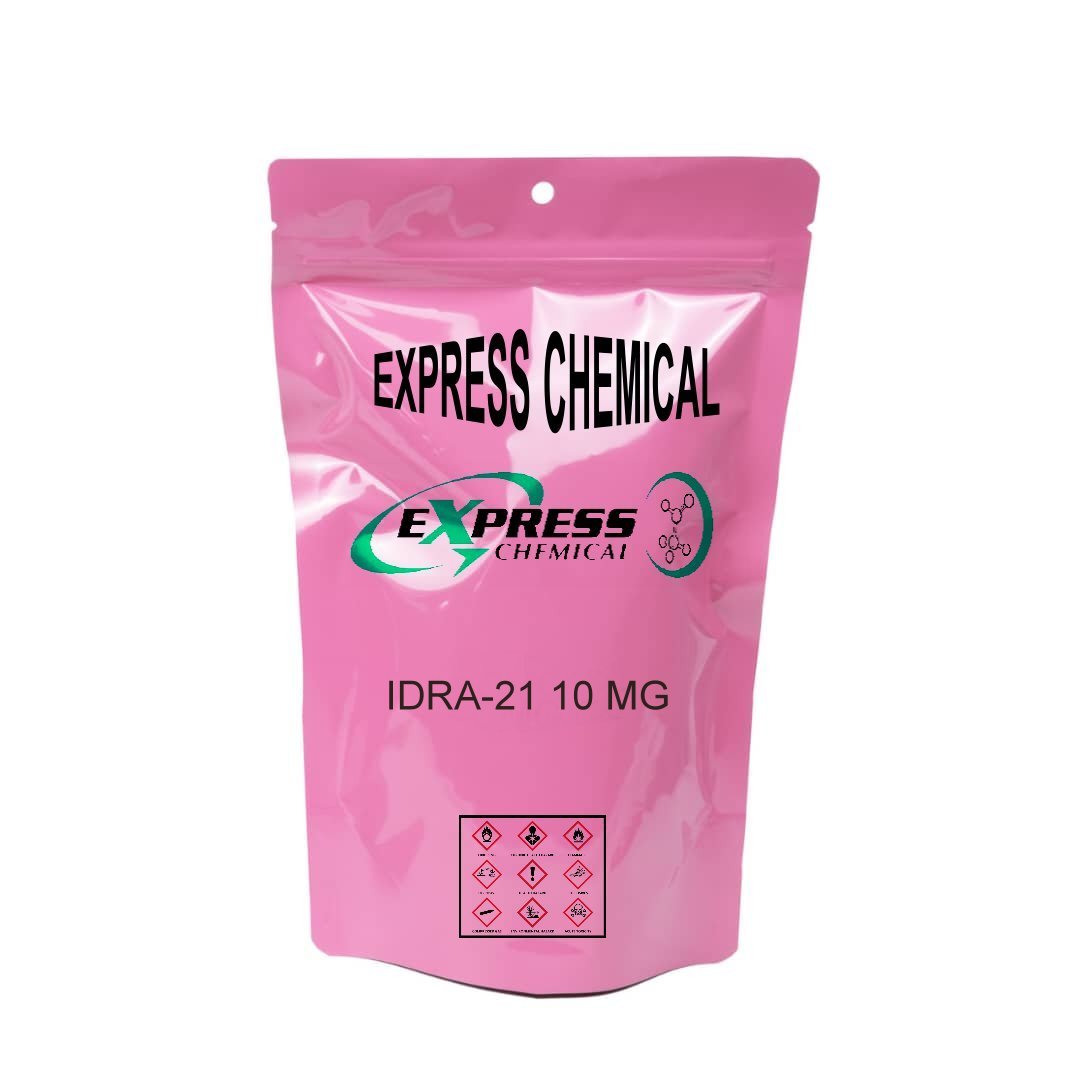
IDRA-21 10 MG Pellets
IDRA-21 Pellets properties
Synonym : 7-chloro-3-methyl-3,4-dihydro-2H-1,2,4-benzothiadiazine 1,1-dioxide
CAS Number : 22503-72-6
Formula : C8H9ClN2O2S
Molar mass : 232.6 g/mol
Purity : >97%
€13.50 – €398.58Prijsbereik: €13.50 tot en met €398.58
* The information on this page is a summary and is not intended to cover all available information about this medication. It does not cover all possible uses, directions, precautions, drug interactions or adverse effects and is not a substitute for the expertise and judgement of your healthcare professional.
IDRA-21 10 MG Pellets – Scientific Description & User Manual
Product description
IDRA-21 (10 mg pellets) is a potential AMPA receptor potentiator belonging to the class of nootropic and neuroprotective research chemicals . It works by enhancing glutamate-induced signaling in the brain, which may lead to improved cognitive function, neuroplasticity, and potentially neurorecovery.
These pellets are highly pure (≥98%) , standardized dosed and intended solely for scientific research and preclinical studies .
Uses & Applications
IDRA-21 is being studied for its possible effects on:
Cognitive Enhancement – May increase alertness, learning ability, and memory consolidation.
Neuroprotection – Potential protective effect in neurodegenerative diseases (e.g. Alzheimer’s, stroke).
Neurological Recovery – May Promote Synaptic Plasticity After Brain Injury.
Scientific Research – Study of AMPA receptor modulation and glutamate signaling.
⚠ Not approved for human or veterinary use – For in vitro and controlled preclinical studies only.
Dosage & Safety Guidelines
Investigational dosage (in vitro/preclinical): 5–20 mg/kg (depending on model).
Pellet Solution: Can be dissolved in distilled water or DMSO for experiments.
Administration: Orally (animal models) or directly in cell cultures.
Frequency: Single dose for acute effect; long-term studies require careful monitoring.
🚨 NB:
No human application – No safety data for human use.
High doses may cause neuroexcitotoxicity.
Avoid combination with other glutamate modulators.
Disadvantages & Risks
Overstimulation of neurons (risk of excitotoxicity in case of overdose).
Possible anxiety or agitation in susceptible models.
Limited long-term data on tolerance and adverse effects.
Not suitable for chronic use without extensive toxicity studies.
Frequently Asked Questions (FAQs)
1. Is IDRA-21 legal in the Netherlands?
Yes, but only for scientific research . It doesn’t fall under the Opium Act, but it’s also not approved as a medicine.
2. How exactly does IDRA-21 work?
It enhances the AMPA receptor response , making glutamate signaling longer and more intense. This can lead to improved synaptic communication.
3. Can IDRA-21 be compared to other nootropics?
It has a unique mechanism of action, but similar targets as racetams or ampakines (e.g. Sunifiram).
4. Are there any known interactions?
NMDA antagonists (e.g. memantine) – Potentially adverse effects.
GABAergic agents (e.g., benzodiazepines) – May reduce anxiolytic effects.
Lab Report & Quality Control
HPLC analysis: ≥98% purity .
No detectable heavy metals or solvent residues .
Homogeneous pellet formulation for consistent dosing.
Batch certification available for research institutions.
Recommended Research Scenarios
Cognitive studies – Effects on memory and learning in animal models.
Neuroprotective research – Potential role in ischemic injury (stroke models).
Electrophysiology – AMPA receptor response measurements in neuronal cultures.
🔬 For controlled laboratory use only – No recreational use!




 NL_BE
NL_BE  NL
NL  DE
DE  PT
PT  FR
FR  ES
ES  IT
IT  CS
CS  SK
SK  PL
PL  RU
RU  ZH
ZH  EN
EN  IS
IS  NB
NB  NN
NN  SV
SV  DA
DA  DE_AT
DE_AT  SL
SL  TR
TR  FI
FI  AR
AR  ET
ET  FR_BE
FR_BE  HR
HR