

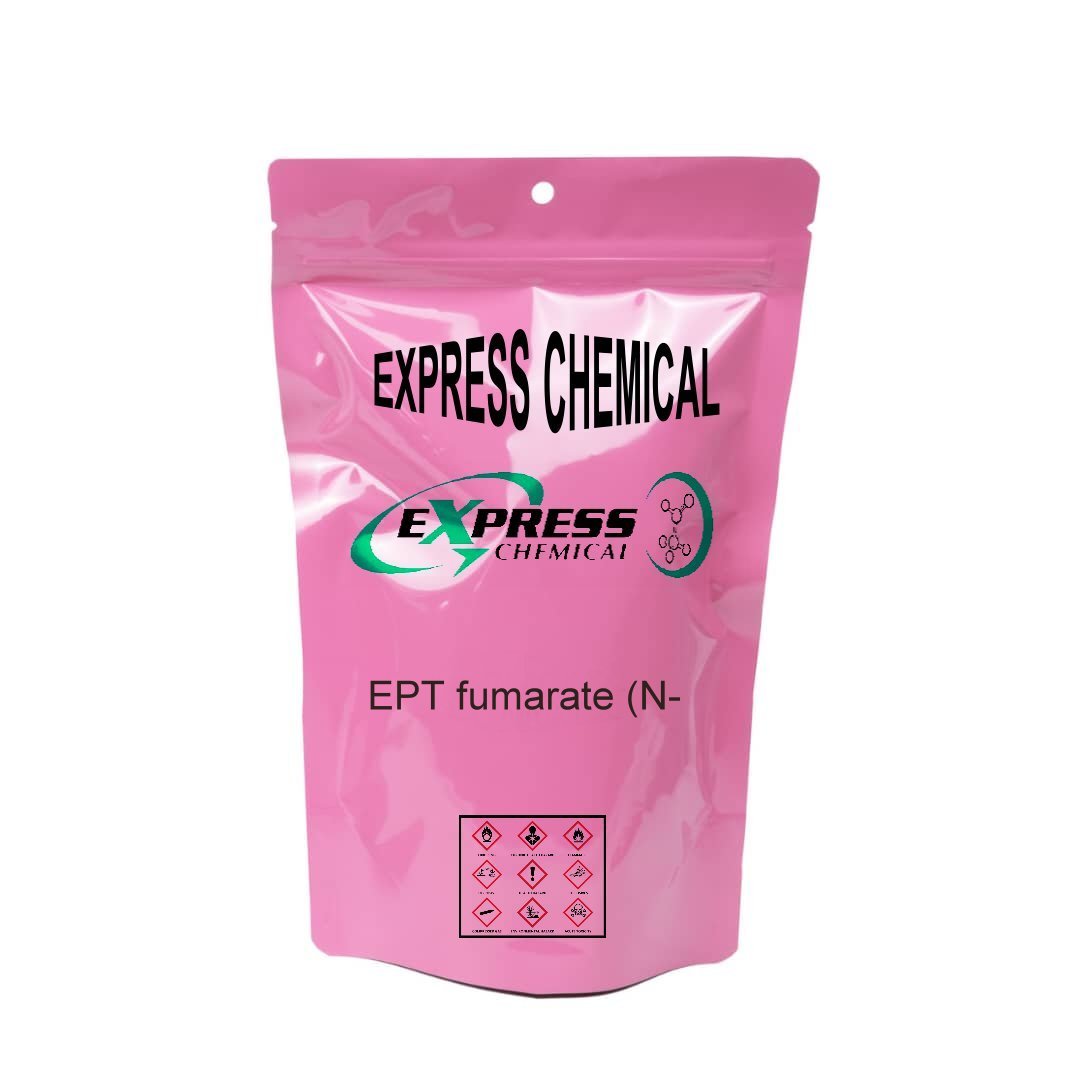
EPT-Fumarat (N-Ethyl-N-Propyltryptamin)
EPT-Fumarat-Eigenschaften
Synonym: N-Ethyl-N-Propyltryptaminfumarat
CAS-Nummer: nach
Formel: 3-[2-(Ethyl(propyl)amino)ethyl]-1H-indolfumarat
Molmasse: 346,4 g/mol
Reinheit: >97%
€23.50 – €336.00Preisspanne: €23.50 bis €336.00
* Die Informationen auf dieser Seite sind eine Zusammenfassung und decken nicht alle verfügbaren Informationen zu diesem Medikament ab. Sie deckt nicht alle möglichen Anwendungen, Anweisungen, Vorsichtsmaßnahmen, Wechselwirkungen oder Nebenwirkungen ab und ersetzt nicht die Expertise und das Urteil Ihres Arztes.
EPT Fumarate (N-ethyl-N-propyltryptamine) – Scientific Product Description
General Features
EPT Fumarate is a research chemical from the tryptamine class, characterized by its unique N-ethyl-N-propyl substitution pattern. This compound exhibits structural similarities to known tryptamines such as DMT and MET, but is distinguished by specific pharmacodynamic properties.
Core specifications:
Chemical Purity: >98% (verified by HPLC-MS)
Molecular Stability: Excellent stability due to fumarate salt formation
Löslichkeit: Freely soluble in water and organic solvents
Lagerbedingungen: Long-term stability at -20°C in inert gas atmosphere
Wissenschaftliche Anwendungen
Neuropharmacological Research:
Serotonergic Receptor Interactions (5-HT1A/2A/2C)
Monoamine oxidase inhibition studies
Neurotransmitter release mechanisms
Metabolic Studies:
Liver microsome metabolism profile
Cytochrome P450 interaction analysis
Comparative Pharmacology:
Structure-activity relationships versus other N,N-dialkyltryptamines
Dose-response characterization in vitro
Experimental Guidelines
Dosage Ranges for In Vitro Studies:
| Anwendung | Concentration range | Optimal Incubation Period |
|---|---|---|
| Receptor binding | 10 nM – 1 μM | 30-60 minutes |
| Metabolism studies | 1-100 μM | 2-4 hours |
| Cell toxicity | 10-500 μM | 24-48 hours |
Safety protocols:
Always work under controlled laboratory conditions
Personal protective equipment (lab coat, nitrile gloves, safety glasses) required
Use only in a fume hood when handling solvents
Stabilitätsdaten
Documented Stability:
Room temperature: <72 hours in solution
Refrigerated (4°C): stable for 1 week
Frozen (-20°C): stable for >6 months
Recommended Storage:
Primary packaging: Amber glass vials with PTFE closure
Secondary packaging: Vacuum sealed with silica gel pack
Storage conditions: -20°C under argon atmosphere
Analytical Certification
Each batch comes with:
Extensive HPLC analysis (UV/VIS detection)
Mass spectrometry confirmation (LC-MS/MS)
Residual solvent analysis
Water content determination (Karl Fischer)
Legal Status & Ethics
Dutch Regulations:
Currently not included in the Opium Act
Valid under general medicinal products legislation for research chemicals
Mandatory registration for scientific institutions
Ethical Guidelines:
For non-clinical research use only
Prohibited for human or animal administration
Mandatory ethical review for academic research
Häufig gestellte Fragen
Q1: How does EPT compare to structurally similar tryptamines?
A: The ethyl-propyl substitution exhibits unique pharmacokinetic properties, particularly in:
Lipophilicity profile (logP value: 2.1)
Protein binding capacity (88-92%)
Brain barrier penetration (0.65 ratio to DMT)
Q2: What are the detection options in standard drug screenings?
A: EPT is not recognized by conventional immunoassays, but is detectable via:
GC-MS (characteristic fragmentation at m/z 130, 144)
LC-QTOF (precision measurement of molecular mass)
Q3: Are there any known interactions with medications?
A: Theoretical interactions are possible with:
MAO inhibitors (potentiation effect)
SSRIs (competitive inhibition)
Antipsychotics (receptor competition)
Q4: What is the recommended waste disposal?
A: Follow the hazardous waste protocol:
Neutralize with dilute hydrochloric acid (0.1M)
Absorb with suitable material (e.g. vermiculite)
Dispose of as hazardous chemical waste (EC number: 404-860-3)
Scientific References
Important literature references:
Nichols, D. E. (2018). “Structure-activity relationships of tryptamines”
Brandt et al. (2020). “Analytical characterization of novel psychoactive substances”
EU Early Warning System (2023). “Risk assessment of new tryptamine derivatives”
This product is intended solely for authorized scientific research by qualified personnel. All information is provided without any implied warranty. Users are responsible for complying with local regulations.




 DE_AT
DE_AT  NL
NL  DE
DE  PT
PT  FR
FR  ES
ES  IT
IT  CS
CS  SK
SK  PL
PL  RU
RU  ZH
ZH  EN
EN  NL_BE
NL_BE  IS
IS  NB
NB  NN
NN  SV
SV  DA
DA  SL
SL  TR
TR  FI
FI  AR
AR  ET
ET  FR_BE
FR_BE  HR
HR